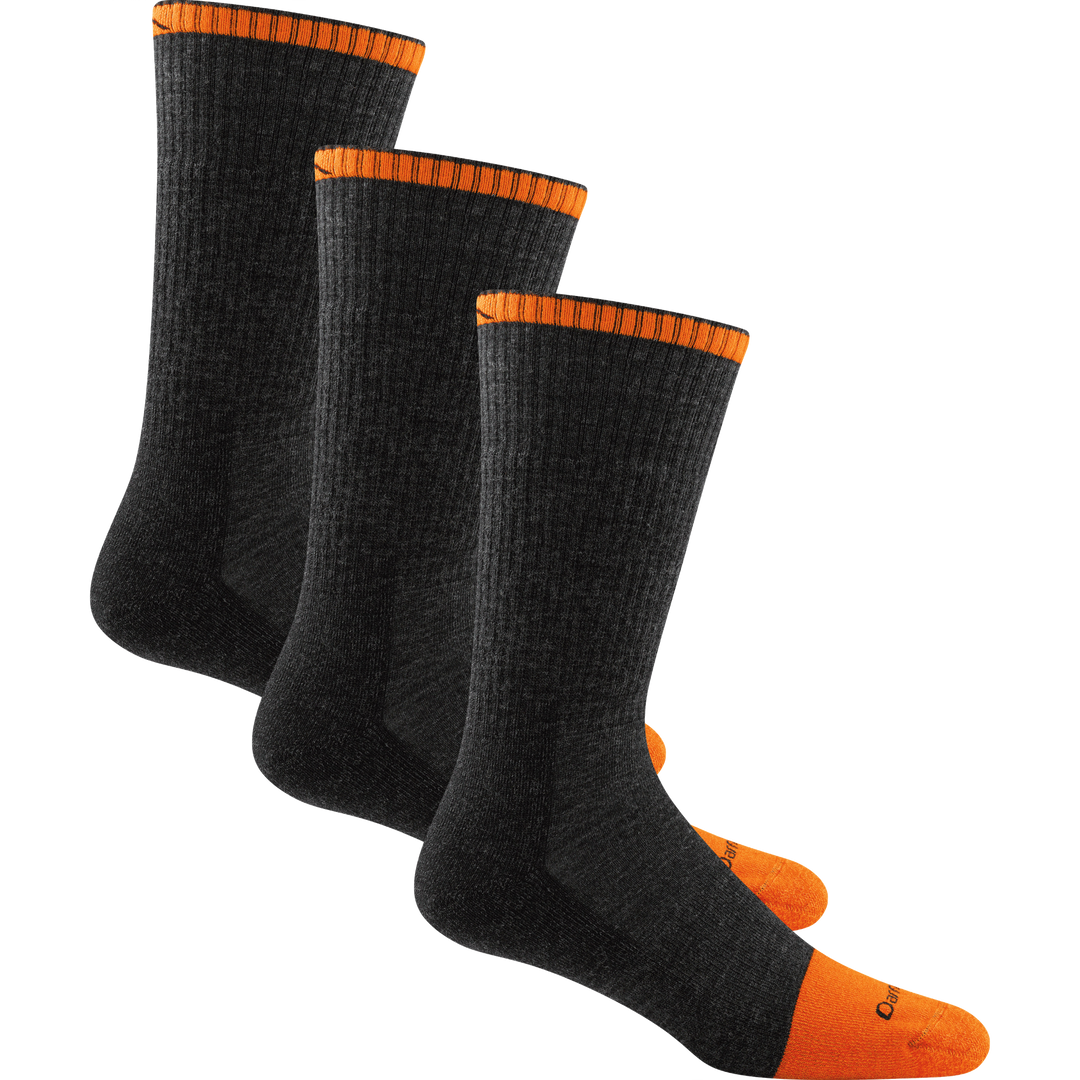
Sale price$81.00
Men's Darn Tough Steely Boot Midweight Work Socks - 2006 - 3 PACK

Sale price$78.00
Men's Darn Tough John Henry Boot Midweight Work Sock - 2001 - 3 PACK


Sale price$81.00
Women's Darn Tough Steely Boot Midweight Work Socks - 2015 - 3 PACK

Sale price$80.95
Men's Darn Tough Steely Boot Midweight Work Sock 3-Pack - Graphite

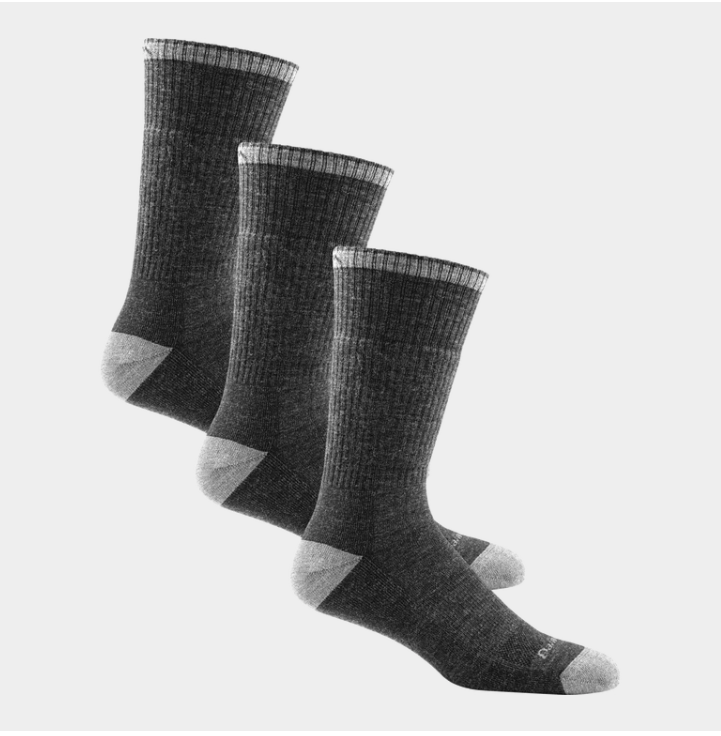
Sale price$77.95
Men's Darn Tough John Henry Boot Midweight Work Sock 3-Pack - Gravel


Frequently Asked Questions
Merino wool or a merino blend is the best all-around choice for work boots, because it moves sweat off your skin and keeps insulating when damp. Match the height to your boot: crew for a 6-inch boot, midcalf or boot height for an 8-inch, and over-the-calf for rubber boots and tall pull-ons. Save plain cotton for short shifts or dry indoor work.
Merino works in summer as well as winter, because it regulates temperature rather than just adding warmth. It moves moisture away from the foot, which is what actually keeps you cool in a boot. Choose a lightweight merino sock in hot weather and save the midweight for cold months and insulated boots.
Any well-fitting sock works in a steel toe boot, but reinforced-toe socks like Wigwam's At Work Steel Toe last longer. The edge of the safety cap sits right over the toes and abrades a standard sock faster than the rest of the boot does. If you are wearing through socks at the toe, that is usually why.
Over-the-calf, often shortened to OTC, means the sock comes up past the widest part of your calf rather than stopping at the ankle or lower shin. The point is coverage: in a rubber boot, a logger, or a tall pull-on, the boot shaft rubs bare skin anywhere the sock does not reach. OTC also holds its position better and slides down less over a shift.
Replace work socks once the cushioning packs flat underfoot or the knit thins at the heel and ball, since that is where the padding does its job. A sock that has lost its stretch and slides down during the day is also finished, because a bunching sock is a blister waiting to happen. Rotating several pairs rather than wearing one favorite makes the whole set last longer.
Damp socks are the usual reason, and cotton is the usual culprit, since wet fabric pulls heat away from the foot. The other common cause is a sock too thick for the boot: if it compresses the insulation and cuts off circulation, you end up colder than with a thinner sock. Try a midweight merino sock with a little room left in the boot.
Georgia's merino wool crew sock and the Wigwam-built Muck socks are made in the United States. Origin varies by model across the rest of the range, so check the specific product page if domestic manufacturing matters for your purchase.
Recently viewed
Our Top Brands